The Impact of Erasure
Each year, millions of people move through U.S. jails, prisons, immigration detention, and juvenile facilities. Among people released from state prison, nearly 2 out of 3 will be rearrested within three years.
Not because they chose to. The psychological damage of confinement is never treated. Missing Persons asks why.
The story the world needs to hear.
Missing Persons follows director EL Sawyer on a cross-country journey to understand what solitary confinement, chronic stress, and institutional isolation do to the human brain. Drawing on cutting-edge neuroscience, the film makes visible the invisible damage that sends so many people cycling back through a broken system.
The film takes audiences inside research labs, prison cells, and the lives of people trying to rebuild after release. Weaving together personal testimony with scientific rigor to reveal a public health crisis hidden in plain sight.
Through conversations with researchers at Stanford, Thomas Jefferson University, the University of British Columbia, and other institutions, Missing Persons assembles the scientific evidence that mass incarceration causes measurable, lasting neurological harm. And it argues that healing, not punishment, is the only path forward.
"Every new world makes for a new worldview, and makes a new brain."Dr. Robert Sapolsky, Stanford University
The Brain Under Confinement
Three research contexts. Three isolated environments. A converging body of evidence about what extended confinement does to human biology. And one population missing from that same scientific and human consideration: people who experience systematic incarceration.
The Vanishing Hippocampus
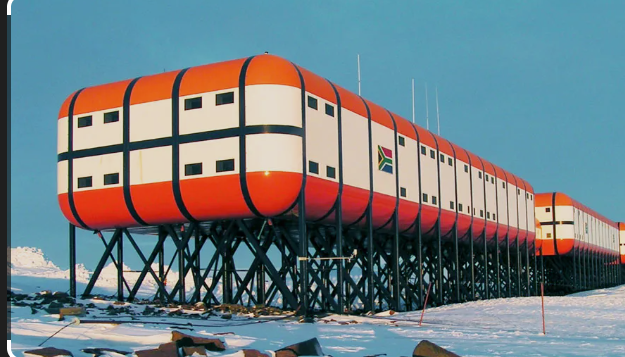
Dr. Alexander Stahn et al. · Charité Berlin / University of PennsylvaniaResearchers stationed in Antarctica for winter-over missions experience measurable neurological changes. Dr. Alexander Stahn's 2019 NEJM study tracked eight to twelve expeditioners over fourteen months and found significantly reduced dentate-gyrus volume, a part of the hippocampus central to memory, stress regulation, and spatial reasoning, along with lower BDNF levels. The authors call the findings preliminary and note the small sample.
 01
01
The Astronaut Parallel
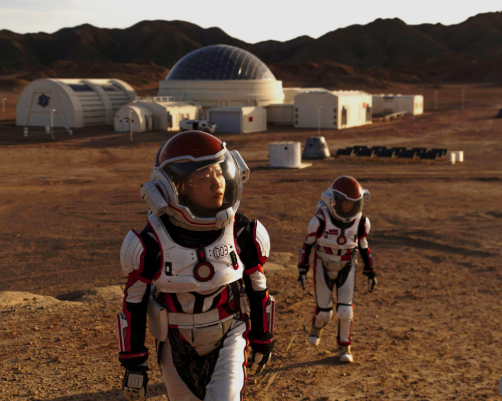
Dr. Phyllis Johnson · University of British ColumbiaResearchers, including those working alongside NASA, have studied the psychology of long-duration confinement for decades, not to understand prisons, but to keep astronauts functional on isolated missions. Dr. Johnson's research at UBC on isolated and confined environments documents psychological parallels with other forms of prolonged confinement: loss of autonomy, sensory monotony, and fractured identity.
 02
02
BDNF and the Brain Under Stress
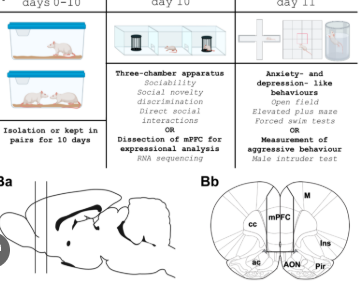
Dr. Richard Smeyne · Thomas Jefferson UniversityIn mouse isolation studies, Dr. Smeyne's team mapped how chronic environmental stress suppresses BDNF, brain-derived neurotrophic factor, the protein responsible for neural growth and resilience. Isolated male mice showed significantly reduced BDNF; the effect was not observed in female mice. The research is animal-based, and direct human application requires caution.
 03
03
CONVICT NO. ████
LEASED TO:
████████ CO.
TERM: INDEFINITE
OFFICIAL RECORD
MONTH OF MAY
LABOR CONTRACTED
NO. OF PRISONERS: ██
OF
CORRECTIONS
The Exception That Built a System
The erasure of incarcerated people from public health, from policy, from human consideration, is not accidental. It was written into law.
"Neither slavery nor involuntary servitude, except as a punishment for crime whereof the party shall have been duly convicted, shall exist within the United States."
13th Amendment to the U.S. Constitution, 1865
Three words, "except as punishment," embedded an exception clause into the abolition of slavery that became the legal architecture of mass incarceration. It permitted penal labor. It normalized harsh conditions. It codified the removal of incarcerated people from the category of the human.
The Black Codes that followed immediately after 1865 criminalized Black existence: vagrancy, unemployment, loitering, funneling freed people directly back into forced labor through the courts. Convict leasing became the South's answer to the end of plantation slavery: a system in which states leased prisoners to private companies for profit, with zero accountability and no legal protections.
This was not a failure of the system. It was the system. The mechanisms built between 1865 and the early 20th century: criminalization of poverty, removal of civil rights upon conviction, erasure of psychological humanity, are the direct ancestors of the policies Missing Persons investigates today.
Today, the United States incarcerates more people than any nation on earth. More than 10 million people cycle through jails and prisons each year. The Surgeon General issues advisories on social isolation without mentioning the 2 million people held in the most extreme isolation environments in the country. That silence has a history.
Missing Persons investigates
How the legal erasure written into the 13th Amendment became the psychological erasure that the film documents, and what dismantling it would actually require.
EL Sawyer
EL Sawyer is a Philadelphia-based filmmaker on a healing journey. Sentenced at 17 to 8 to 20 years in a Pennsylvania state prison, EL spent over a decade navigating the psychological conditioning of incarceration before coming home to rebuild his life from the ground up.
That experience, and the grief of watching others fail where he survived, became the seed of Missing Persons. EL's previous documentary Pull of Gravity (2015) explored re-entry through the lens of the people left behind. His follow-up, Music Vets (2023), documented the healing power of music therapy inside Veterans Affairs facilities.
Missing Persons is his most ambitious and personal project: a science-first investigation into why the system fails and what it would take to change it. For EL, this film is not just advocacy. It is part of his own healing.
More than a film.
Feature Film
A feature-length documentary that takes viewers inside the science of incarceration, combining researcher interviews, personal testimony, and cinematic storytelling.
Human By Design
A Neuro-Informed Conference serving as the primary impact platform for the film, convening scientists, policymakers, advocates, and people with lived experience to translate the film's findings into systemic action.
Missing by Design Podcast
Long-form conversations with the scientists, advocates, and formerly incarcerated people whose work informs the film. Each episode goes deeper than the documentary can.
Listen to the seriesThe people making this possible.
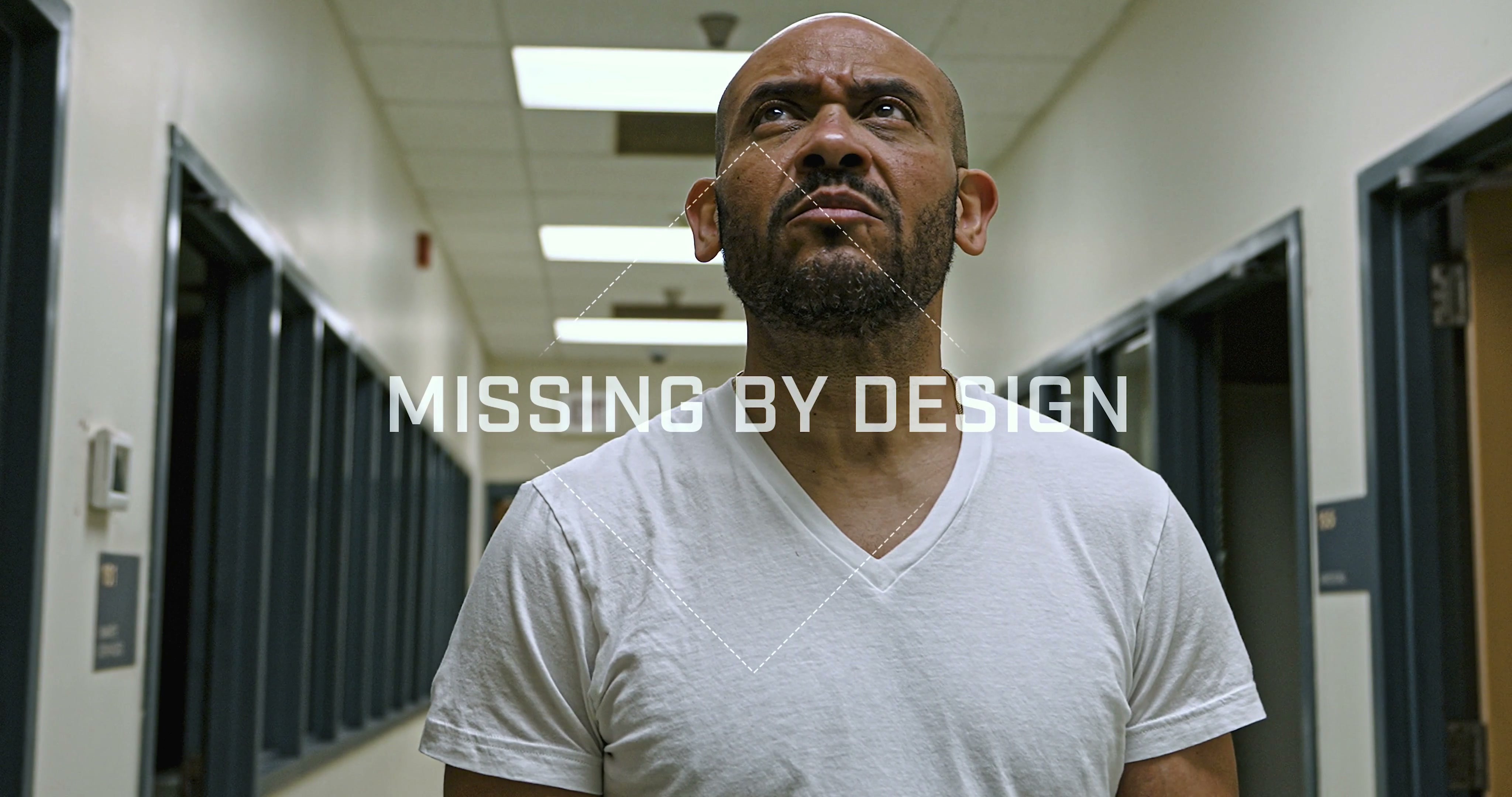
The companion podcast
Long-form conversations with scientists, advocates, and people whose lives have been shaped by the carceral system. New episodes throughout production.
Episodes dropping soon
Help us tell
this story.
Missing Persons is an independent documentary. Your support helps bring this film to life and sustain the work around it.